Virtualization
Made
Simple
What is Virtualization?
Virtualization is a computing technology that allows for the creation of virtual (non-physical) versions of computing resources like servers, storage devices, networks, and operating systems. Each of these virtual environments, collectively known as virtual machines (VMs), exists independently of the underlying physical hardware on which they are built, thereby functioning as their own self-contained systems. By creating virtual machines, users can compartmentalize computing hardware, converting one computing resource into multiple different ones.
💡 A Practical Example
Consider a start-up writing firm looking to expand its team of content writers. The new writers would need their own computers. Traditionally, the company would have to invest in purchasing and maintaining these new computers; with virtualization, however, virtual desktops for different writers can simply be created on existing hardware, saving the company on hardware costs.
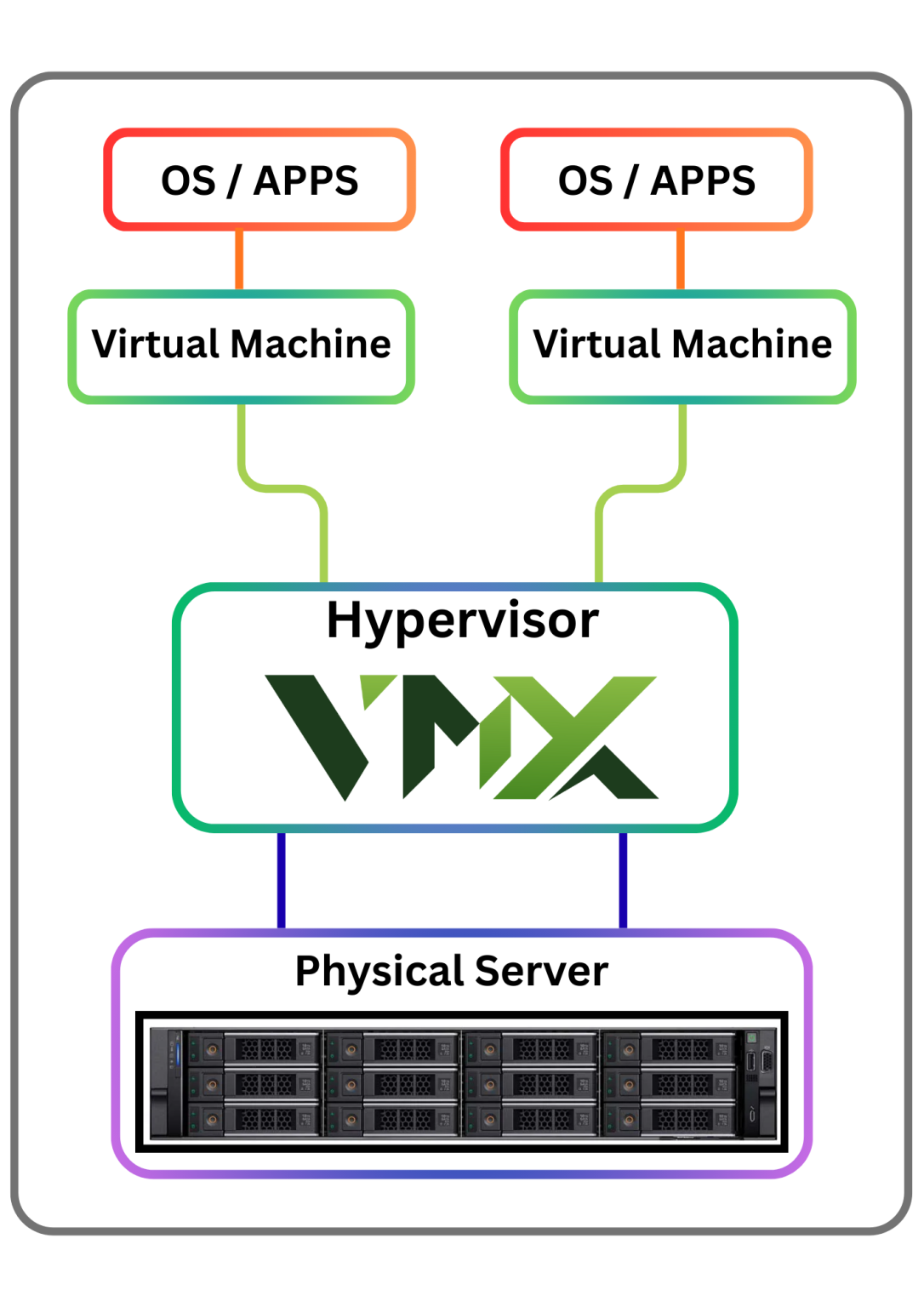
How Virtualization Works
How Virtualization Works Virtualization is quite an advanced technology, but the idea behind it is straightforward: Divide the resources of a physical computing system into separate parts and convert these parts into virtual machines which run their own operating systems and apps.
This division is achieved by the use of a hypervisor, a specialized software layer that sits between your physical hardware and the virtual machines.
Key Areas of Virtualization
Server Virtualization
Dividing single physical servers into virtual servers. Each virtual server acts as a standalone server, enabling users to run multiple tasks on a single server.
Desktop Virtualization
Creating virtual desktop environments delivered to a central server and accessible from any device, anywhere.
Storage Virtualization
Combining multiple physical storage devices into a single, unified virtual storage accessible from anywhere.
Network Virtualization
Combining network hardware with software to create flexible virtual networks that are easier to manage, scale, and secure.
Application Virtualization
Running software applications in isolated virtual environments instead of installing them directly on user devices.
Why Should You Care?
Cost-Effective
Reduce hardware costs by maximizing existing resources and eliminating the need for additional physical machines.
Highly Efficient
Make computing more efficient by optimizing resource usage and improving overall system performance.
Ultimate Flexibility
Scale operations seamlessly without purchasing new hardware, adapting quickly to changing business needs.
Infinitely Scalable
Run multiple operating systems on one computer and expand your capabilities without physical limitations.